
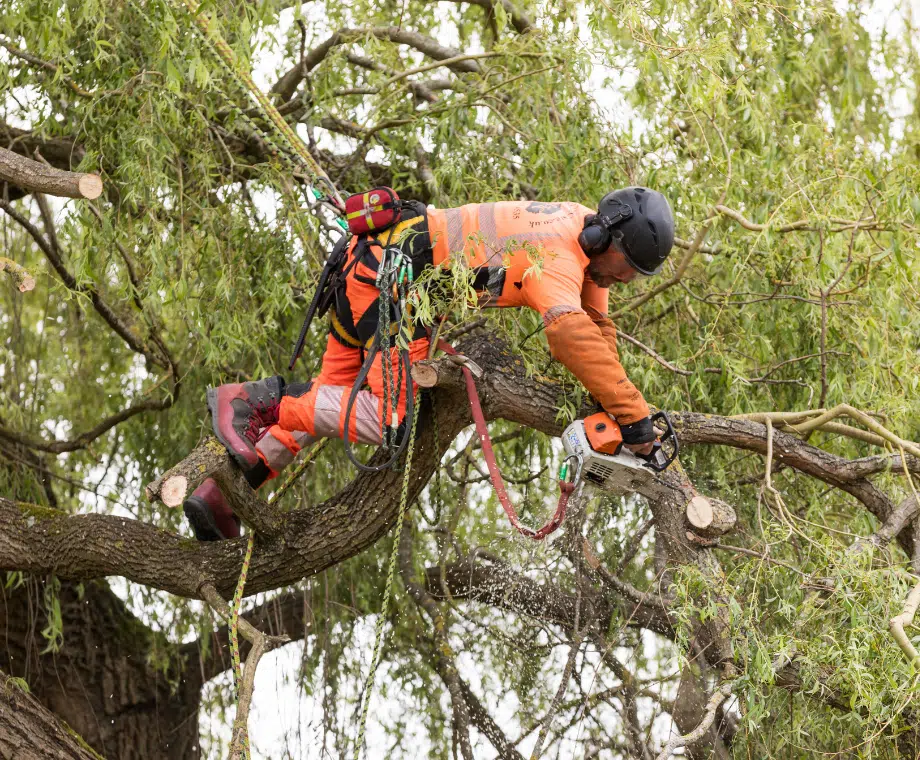
Dangerous Tree Signs and Tree Decline
How to spot tree health problems, structural defects and potential safety risks before they become serious
Most people can recognise when a tree looks healthy. A full canopy, healthy leaves and consistent annual growth are all signs of good vitality.
When something changes, it’s often noticeable. The tree may have fewer leaves than usual, patches of dead branches in the crown, or signs of decay around the trunk. While some issues can be caused by seasonal conditions such as drought, others may indicate a more serious problem that requires professional attention.
Whether the tree is in a private garden, school grounds, housing estate or commercial property, recognising the early warning signs can help prevent costly damage and reduce safety risks.
Signs that a tree may be in decline
Summer is often one of the easiest times to identify vitality issues because trees are in full leaf and abnormalities become more obvious.
Common signs of decline include:
- Sparse leaf coverage compared with previous years
- Smaller than normal leaves
- Dead branches in the upper crown
- Sections of the canopy failing to produce leaves
- Premature leaf drop
- General loss of vigour
These symptoms can occur for several reasons. During prolonged dry weather, trees may become stressed and conserve water by reducing leaf activity. However, poor vitality can also be linked to underlying problems such as root damage, soil compaction, fungal infection or disease.
If a tree looks noticeably different from previous years, it’s worth having it assessed by a qualified arborist before any underlying issue worsens.
Not all tree problems are visible from the ground
While changes in leaf cover often indicate health issues, some of the most significant defects are structural.
A tree may appear healthy on the outside while developing weaknesses that affect its stability and safety.
Examples include:
- Cavities within the trunk or major limbs
- Splits and cracks in the stem
- Areas of decay
- Weak branch unions
- Root damage
- Abnormal growth patterns such as reaction wood or unusual bulges
These defects can increase the likelihood of branch failure or, in more severe cases, the failure of part or all of the tree.
Many structural issues are difficult for an untrained person to identify, which is why regular inspections are valuable, particularly for mature trees.
What are the signs of a dangerous tree?
A declining tree is not automatically a dangerous tree.
Likewise, a dead tree does not always present an immediate risk, although dead wood will generally become less structurally reliable over time and may require closer monitoring.
The concern arises when the structural integrity of the tree begins to deteriorate. As decay develops or weaknesses increase, branches can sometimes fail unexpectedly, particularly where defects or decay are not readily visible. In exposed locations, high winds can place additional stress on compromised trees.
The level of risk often depends on what lies beneath the tree.
Trees located near roads, footpaths, car parks, buildings, playgrounds and other frequently used areas require closer monitoring because the consequences of failure can be much greater.
For commercial landowners, managing agents, schools and housing providers, regular tree inspections form a key part of demonstrating a responsible duty of care.
Why regular tree inspections matter
Trees are living structures that change over time. What appears to be a minor issue today can develop into a significant health or safety concern if left unchecked.
Regular inspections by experienced arborists can identify developing problems long before they become obvious to the casual observer. Through professional Arboriculture Consultancy, tree owners can gain a clearer understanding of a tree’s condition, expected lifespan and any management requirements.
Where concerns exist about structural stability, Tree Health & Safety Assessments & Reports can help determine whether a tree presents a risk to people, property or infrastructure. This is particularly important for trees located near roads, footpaths, car parks, schools and other high-use areas.
In some cases, the underlying cause of decline may be hidden within the trunk, stem or root system. Specialist Tree Decay Detection & Assessment techniques can help identify internal defects and assess the extent of any decay, allowing informed decisions about future management.
Professional inspections can help:
- Identify signs of disease and decline
- Detect structural defects and hidden decay
- Assess potential safety risks
- Recommend appropriate management options
- Support compliance with duty of care responsibilities
For organisations managing multiple sites or large tree populations, routine inspections also provide a structured approach to tree risk management, helping to demonstrate that trees are being monitored and managed responsibly.
What should you do if you’re concerned about a tree?
If a tree appears unhealthy, has visible defects or has changed significantly in recent months, the best course of action is to seek professional advice.
An experienced arborist can carry out a visual assessment and determine whether the issue is temporary stress, a health problem or a structural concern that requires attention.
In many cases, prompt action can preserve the tree, improve its condition and reduce future risks.
Expert Tree Inspections Across the South East
Connick Tree Care has been providing professional arboricultural services across the South East since 1985. As an Arboricultural Association Approved Contractor, our experienced team carries out tree inspections and surveys for homeowners, schools, housing associations, local authorities, estates and commercial organisations.
If you’re concerned about the condition of a tree on your property, please get in touch. We can provide expert advice and practical recommendations to help you make informed decisions about its future.
